Sunday, February 17, 2013

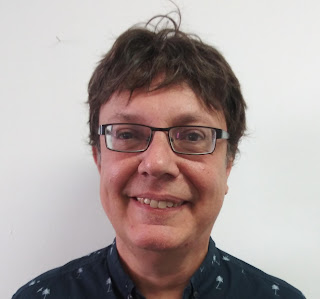
SCHENKEN, TIM


9/26/1943, Sydney, Australia

Starts: 34

Points: 7

Wins:0

Poles:0

Fastest Laps:0


Judging from the press Schenken got in 1968, one would expect him to be world champion by the early 70’s. In fact, Tim had swept every one before him in F-Ford and Formula 3, winning in one year more races than most people win in a career. Things started to get tougher in F-2 though. Needless to say, F-1 was no piece of cake either. Tim got his first break driving the De Tomaso for Frank Williams, replacing Brian Redman. To his credit he managed to qualify the car all four times he appeared, a better performance than Redman’s. This was sufficiently good to attract the Brabham team, which signed Tim to replace Jack Brabham. The early part of the year was a bit tough, but in Britain Schenken qualified 7th. This was followed by three other top ten starts, plus a good helping of points from 6th in Germany and a swell 3rd place and podium in Austria. By the end of the year Schenken was back to the bottom of the timesheets, and was not retained by Brabham. In F-2 he showed a good turn of speed, and was one of the top drivers in the category. Leaving Brabham seemed right, as the team was obviously on a downward spiral, while Team Surtees, which Tim joined, seemed to be on the way up. The beginning of the year was not bad: right on his first race, Schenken scored a 5th place in Argentina, followed by eighth place on the grid in South Africa and good placings in the British non championship races. Henceforth, Schenken’s performance dropped, in spite of two very “racy” 5th grid positions in England and France. The relationship between Schenken and Surtees, known for being difficult, did not gell, and by the end of the year Tim had been shown the door, qualifying 32nd and dead last in the USA. For 1973 Schenken was already out of a regular drive in F-1, although he remained in the limelight in Formula 2 and Sports Car racing with Ferrari. He was one of several drivers to have the displeasure of driving an Iso Marlboro that season, in his case in Canada, finishing 14th. For 1974, Tim was going to back on the frame, with an ambitious project. Rondel (Ron Dennis’ F-2 team) had been planning an entry in F-1, but wisely gave up along the way, the project being picked up by no other than Ron Tauranac, the Australian that ran Brabham in 1971, before selling to Bernie Ecclestone. The new team was going to be called Trojan and in spite of the principal’s credentials, seemed to be a little short on funding by the time it appeared in Spain. The car also looked somewhat bulky, and it soon became clear that this would not be the instrument to revitalize Schenken’s F-1 career. He did manage to finish 3 times, including two tenth places, but also failed to qualify a couple of times. The project would not survive beyond Monza, so for the North American races Tim was free. As usual, Lotus planned to field a 3rd car in Watkins Glen, and Schenken was named to drive it. Another lost opportunity this was. Schenken qualified only 27th out of 30 and was the first reserve. He ended up starting anyway, but was disqualified in what amounted to be his last GP. Schenken continued racing a few more years, mostly driving assorted Porsches and Sports cars for the Georg Loos team, finding some success at this level. Eventually he founded the Tiga Racing concern with Howden Ganley , and continues to be involved in the sport to this day, in a managerial role.
  • Cars driven outside of Formula 1:

Formula 2: Brabham, Surtees, Motul, Alpine, March

Formula 3: Chevron, Brabham

Sports-cars: Ferrari, Porsche (935, 934, 911 Carrera), Mirage, Ford GT40, Chevron, Matra-Simca

Touring cars: Ford Escort

Can-Am/Interseries: Porsche 917


Keke Rosberg

F-1 BIOGRAPHY BY CARLOS DE PAULA
Born 12/6/1948, Stockholm, Sweden (Finnish Nationality)

Starts:114

Points: 159.5

Wins:5

Poles:5

Fastest Laps:3

Sometimes Formula 1 feels like a soap opera. Such is the case of Keke Rosberg’s career, so full of anticlimaxes, ups and downs and sudden changes. One would consider the man finished in 1981, after a terrible season driving for Fittipaldi, and no one would expect the scoreless driver to be world champion the next year. Anticlimax or not, Rosberg was very talented, in fact his statistics don’t show half of it. They don’t show his acrobatic style and sheer speed as well. Rosberg rose to prominence driving Super Vees in Europe, eventually reaching Formula 2 in 1976, driving for Jopr Obermoser’s TOJ. He did the best he could with the novice team, and caught the attention of American Fred Opert, who ran Chevrons. In these cars, Rosberg won a few Formula 2 races, although he never challenged for the championship. This was enough for Teddy Yip to call Rosberg to drive for his budding Formula 1 team. Yip was a Macao millionaire, who had supported many drivers and teams during the course of the years, and had made the jump to Formula 1 in 1978. The ugly, Ralt designed car did not look fast. In fact, Rosberg only qualified it once in five outings. However, Keke astounded the racing world when he won the International Trophy under deluge conditions, heading Emerson Fittipaldi in the Copersucar. By Sweden Rosberg was called to drive the ATS, which was not a good car as well, but at least it qualified. He was back at Theodore for the German Grand Prix, driving the year old Wolf. His fortunes improved a bit, but the association was less than competitive all year. Rosberg was out of Formula 1 in early 1979, but then got called to replace the retiring James Hunt at Wolf. He only finished a single race, 9th in France, and did qualify 8th at Zandvoort, but the rest of the season was quite inconclusive and indifferent. The Fittipaldi team, which was beaten by Rosberg in the 1978 International trophy, decided to buy Wolf’s assets, retaining Rosberg as well. He had a superb 3rd place in his debut for the team in Argentina, after qualifying 13th, but then competitiveness slipped. There was a definite mid season slump, but in Germany Keke qualified 8th, finished 5th in Italy and qualified 6th in Canada. More tellingly, Keke proved faster than twice world champion Emerson Fittipaldi, who retired deciding to concentrate on team management (Emerson proved no slouch in Formula Indy, a few year’s later, so you can guess Rosberg’s Herculean efforts in the car). Keke continued in the Brazilian team, but in spite of a few good qualifying performances early in the season, after Monaco Fittipaldi proved to be hopelessly uncompetitive, as well as underfinanced. Having failed to qualify from Germany to Canada, Keke had a single chance to score a single point in the year, at Las Vegas and failed, thus going score less. Williams was the top team of the day in 1981, and had two top line drivers, Reutemann and Jones. Jones suddenly decided to retire after the end of the 1981 (a decision he would regret later), so a place was open at Williams. Frank decided to give Rosberg a shot, and the Finn obliged by finishing 5th in his debut, in South Africa. For all intents and purposes, Reutemann would remain number 1. Then the mercurial Carlos decided to quit too! So Williams, who had two top drivers the year before, now had a bet on his hands (Rosberg) and nothing else (eventually he hired Derek Daly). However, Rosberg performed admirably in the 3 races that ensued Reutemann’s departure, finishing all three in second place. He was disqualified in Brazil, so his points were stripped, but it did look as though Ferrari was the best bet to carry the championship. Then Villeneuve died, and Pironi assumed the role of number 1 at Ferrari, suddenly accruing a large number of points midseason. Meanwhile, Rosberg had gone into a little slump, managing a 4th in Detroit and 3rd in Zandvoort during midseason. Then in Germany, disaster struck Ferrari again: Prioni who was leading the championship with some margin, had a terrible accident, and was sidelined for the rest of the year. Soon after that Rosberg had three straight podium positions, culminating with a win in the novel Swiss Grand prix, his maiden Formula 1 victory. He came to Las Vegas as favorite, and John Watson failed to do what he needed to snatch the title away, which was winning and hoping Keke did not score. From rags to riches. So for 1983 Keke was finally considered a top F-1 driver, beginning the year scoring a pole in Rio, but was disqualified again. He then won at Monaco, and was second at Detroit, but the Cosworth engined Williams was by then a liability against turbo powered competition. By mid year Rosberg was qualifying closer to midfield, and it became obvious that Williams needed the Honda turbo engine as soon as possible. Keke debuted the engine in South Africa, qualifying 6th and finishing 5th. Keke would have a turbo engine for a full season for the first time in 1984, and proved competitive from the word go. He was 2nd again in Brazil, this time getting to keep the result, and qualified well for most races, but results were poor. He did give the Honda turbo engine its first victory in the grueling Dallas G.P., but after that he retired from all races, proving the Williams Honda combination was still unreliable. 1985 was a different story. Keke qualified in the top 5 for most of the races (with three exceptions), posted three fastest laps, got a couple of poles and won two races, at Adelaide and Detroit. He ended up 3rd in the championship, and was hired by McLaren for 1986. In the new environment Rosberg underperformed, although he did get another pole and led comfortably in Germany and also in Australia, but the best he could do was 2nd in Monaco. At the end of the year he retired, although eventually he did resume his racing activities, first with the Peugeot prototype team, and then with Mercedes Benz and Opel in touring cars. He did eventually settle in managerial roles, and is currently a happy dad overseeing the exploits of son Nico at this old home, Williams.

Other cars raced:


Formula 2: TOJ, March, Chevron

Formula 5000:

Formula Super-Vee: Lola

Formula-Atlantic: Chevron

Sports-Cars: Porsche (962), Peugeot

Can-Am: Spyder, Lola

Touring cars: Mercedes-Benz, Opel

LAMMERS, JAN

F-1 BIOGRAPHY BY CARLOS DE PAULA


Born 6/2/1956, Zandvoort

Starts:23

Points: 0

Wins:0

Poles:0

Fastest Laps:0
Dutch drivers never quite excelled in Formula 1, but there were quite a few Dutch drivers in the Formula 3 scene around 1978, including Rothengatter, Bleekemolen and Lammers who seemed to be destined for bigger things. Of the bunch, Lammers appeared the most apt, in fact, he won the 1978 European Formula 3 championship. This gave him enough clout to be hired by Shadow in 1979, to partner Elio de Angelis in the team. Jan’s time at Shadow was unsuccessful, the car was not fast, and the best he did was 14th in qualifying and 9th in a race. There were no points, so he was lured to join ATS for 1980. He failed to qualify for the first three races of the season, then astounded the Grand prix world by qualifying fourth in Long Beach. Unfortunately, he lasted one lap in the race, and the car never again showed any pace in races or qualifying. He was lured to join Ensign after France, to replace the injured Regazzoni, but things did not improve: out of eight outings, he dnq’d 6 times. He was called back by ATS to do a few races in the early part of 1981, with a best 12th place, one retirement and two dnq’s. For 1982, Lammers was hired by Theodore, enduring more of the same: mostly dnq, one retirement and one dns, after getting injured in Detroit. After that Lammers became involved in Sports Car racing, in fact became one of the most successful sports cars drivers of the late 80’s and early 90’s, winning many races including Le Mans. No doubt feeling he had unfinished business in Formula 1, he scrapped sponsorship to race the March Ilmor in the last two races of 1992. The March team was a shadow of its former Capelli heyday, and Lammers was nowhere near competitive. Still, he finished 12th in Australia, going back to a career involving sports cars, touring cars (including driving a Volvo station wagon in the BTCC), Formula 3000, and recently a surprise choice for the GP Masters series. He also runs the A1GP Racing for Holland team.
  • Cars driven out of Formula 1:

Formula 2: March

Formula 3000: Reynard, March

Formula 3: Ralt

Formula Indy: March, Eagle, Lola

Sports cars: Porsche (956, 911), Dome, Jaguar, Ford Capri Turbo, BMW M1, Toyota, Lotus Elise, Courage, Bitter, Lola, Audi, Nissan, Ferrari GT, MG Lola

Touring cars: Volvo Station Wagon, V8 Star

KOINIGG, HELMUT


11/3/1948, Vienna

Deceased 10/6/1974, Watkins Glen, USA

Starts:2

Points: 0

Wins:0

Poles:0

Fastest Laps:0


A few Austrian drivers have been successful in Formula 1, such as Lauda, Rindt and Berger, but for some reason, drivers from that nationality have a high share of misfortune as well. Rindt died before being crowned champion, Lauda was almost burnt alive at the Nurburgring, Ratzenberger died in Imola, Helmut Marko’s eye was damaged beyond repair in Clermont Ferrand. Helmut Koinigg was mostly known for his success in Formula Super Vee, but eventually made it to the Ford Touring car works team and the Porsche works team, driving the Turbo Carrera. He proved fast, and was entered in the Finotto Brabham for the Austrian GP of 1974, failing to qualify. However, he was hired by Surtees to race in the final two Grands Prix of the season, and did really well to qualify the unloved TS16 in 22nd place in Canada, finishing a worthy 10th. For Watkins Glen, Helmut qualified 23rd, and without any explanation, his car left the road and crashed very hard, killing the unlucky Austrian immediately, the second death at the USA track two years running.

HASEMI, MASAHIRO


Born 11/13/1945, Tokyo, Japan

1 Start

1 Fastest Lap

The Japanese Grand Prix was included in the F1 calendar in 1976. Japan was beginning to become a global economic powerhouse and its car industry was making headways against the American and European competition. Early Japanese forays in F1 had been limited to the mildly successful Honda entries of the 60’s and the disastrous Maki in the 70s. So when it was announced that Kojima would enter the debut Japanese race, with a Dunlop shod car at that, not many people wagered their bets on a competitive entry. However, Masahiro Hasemi did manage to qualify the car tenth, and in the race was credited with fastest lap, a claim that many dismiss as fictitious to this day. This turned out to be Hasemi’s single F1 start, so he stands as the only single race participant to post fastest lap. In Japan Masahiro won a multitude of titles, in single seaters and tin tops. He also competed outside of his country, in Le Mans and other events.

BELL, DEREK in Formula 1


Born 10/31/1941, Pinner, Middlesex, England

Starts:9

Points: 1

Wins:0

Poles:0

Fastest Laps:0


Bell had been around Formula 2 for sometime when he was hired by Ferrari as a Formula 2 driver in 1968. Eventually he got the chance of a lifetime, debuting in F-1 with the Prancing Horse’s cars. He qualified well (for a rookie) in Italy (8th), but retired, while the going was even tougher in USA (qualified 15th, retired as well). He got no further offers to drive Ferraris in F-1, but was hired to handle the four wheel drive McLaren in the 1969 British GP, an outing that ended in retirement as well. In 1970, Bell finished as runner up in the European Formula 2 championship, and debuted in Sports cars. His F-2 entrant, Tom Wheatcroft, put together a deal for Bell to drive a Brabham in the Belgian GP, where Bell retired. John Surtees also gave Bell a chance in the US GP, where Derek got his single Formula 1 point, finishing 6th. Surtees would give Bell other chances, including an entry in the 1971 British GP, where Bell retired. Then for 1972 Bell was retained by Tecno, as one of the PA123’s drivers. This turned out to be a total dud, and Tecno miserably failed to reach the success it had achieved in F3 and F2. The Martini sponsored cars were heavy, the proprietary 12 cylinder engines down on power and unreliable, and Bell continued to further damage his reputation as a single seater driver. Bell persevered in F2 for two more years, 1973 and 1974, while racing a wide range of machines, from touring cars to sports cars and, Formula 5000 and Can Am racers. John Surtees gave him a last GP chance in 1974. Derek was entered in five races, but the TS16 was a tough nut to crack. Bell finished 11th in Germany, but failed to qualify four other times. It became clear to Bell that pursuing a top level single seater career would no longer be possible, and he concentrated in Sports Cars, where he became one of the most successful drivers ever, including five Le Mans victories. He also became a successful broadcaster, and occasionally still races in the USA.

OUTSIDE OF FORMULA 1

Derek has had one of the most diversified careers out of Formula 1, having driven a large number of cars during four decades of racing:

Formula 1 (Non championship): march

Formula 2: Brabham, Ferrari, March, Surtees, BMW

Formula 5000/Group 8: Lola, Penske, Surtees

Formula 3: Brabham

Can-Am/Interserie: Mclaren

Sports cars: Ferrari, Porsche (917, 908, 935, 962, 936, 934, 956, 962, 924), BMW M-1, Abarth, Alpine-Renault, Mirage, Alfa Romeo, McLaren, Kremer-Porsche, Courage, Aston-Martin, Ford M10, Mazda RX7 , BMW 320 Group 5.

Touring cars: Jaguar, BMW, Volvo, Mazda 323

Thursday, February 14, 2013

An interesting article I wrote in 2007


WHAT MAKES A FORMULA 1 DRIVER A CHAMPION?


Carlos de Paula


With Michael Schumacher’s retirement, I am almost positive that we will have a new Formula 1 champion in 2007. Although I do like Fernando Alonso, and believe he is the most complete Formula 1 driver of the current era, after MS’ departure, I was not at all impressed with McLaren’s 2006 performance, so I am betting on a red car winning the title. See my preview on the site’s home page.


Michael’s retirement also brought about the search for the “new Michael”, just like there was a search for a “new Fangio”, “new Clark” and “new Senna”, in the past. You know, that driver you just knew was going to win the championship one day, sooner or later.


After 57 editions of the Formula 1 championship, one reaches the conclusion that there is no such a thing as a sure bet. The current crop of serious candidate for “certain champions” includes Robert Kubica, Lewis Hamilton, Heikki Kovalainen, Sebastien Vettel and Nelson Piquet Jr. Certainly drivers like Fangio, Senna, Michael and Clark were obviously meant to be champions, however, the list of failed “certain champions” is much longer than the sure bets.


Take, for instance, Stirling Moss. Widely known as the champion by merit, Moss managed to amass four runner up and three third places in the world championship, with no less than sixteen victories. But he is not alone. The list of “sure champions” who never won the title is indeed very long: Ronnie Peterson, Gilles Villeneuve, Juan Pablo Montoya, Heinz Harald Frentzen, Jean Alesi, Jarno Trulli, Carlos Reutemann, Jacky Ickx, Dan Gurney, Stefan Bellof, Francois Cevert, Peter Collins, Clay Regazzoni,  Chris Amon, Didier Pironi, Ricardo Rodriguez, Tony Brise, Tom Pryce, Jean Pierre Jarier. Johnny Servoz Gavin, Jan Magnussen, Ivan Capelli, Tim Schenken, Michele Alboreto, Eugenio Castelloti…


On the other hand, there are some drivers who seemed destined for anything but grandeur in their Formula 1 career, who ended up achieving much instead. A clear example is Niki Lauda. His early career was not successful. His forays in F-3 were not indicative of a future champion, he was just an average Formula 2 driver, and most of his early wins came in poorly supported sports car races. His first Formula 1 starts, with a self financed March, did not indicate anything special. In fact, it was only late in 1973, when he had been around Formula 1 for two years already, that Lauda appeared to have special skills, after great drives in Germany and Canada in a down on power BRM. When he was hired by Ferrari at the end of the season, many thought the association would not be successful, and the rest is history.


Britain has produced at least three world champions that seemed destined for failure in their early careers as well: James Hunt, Nigel Mansell and Damon Hill. Hunt was so accident prone that he was nicknamed “James Shunt”. His patron believed him enough to buy James Formula 1 cars before he proved his real worth in Formula 2. And aboard the March 731, in 1973, James transformed himself into a veritable Formula 1 powerhouse, posting fast laps and podiums in what was essentially an average car. In fact, he finished mighty close to Ronnie Peterson in the last championship race of the year, a little over one second. Lord Hesketh dug deeper into his pocket, building Hunt a proprietary challenger, with which he won the Dutch Grand Prix in 1975. Eventually Hunt made his way into the McLaren team, winning the 1976 handsomely, after Emerson Fittipaldi took the foolhardy step of joining his brother’s Formula 1 team. The fire was gone after a couple of seasons, and Hunt quit mid way through the 1979 season. 


Nigel Mansell’s Formula 2 and Formula 3 performances did not indicate a future star in the making. In fact, his first Formula 1 drives were not that impressive, although he did manage a podium in his seventh race, at Belgium, 1981. He stayed at Lotus from 1980 to 1984, and during this period he was always overshadowed by Elio di Angelis, himself not a stellar driver. By 1984, Mansell was qualifying better, but the best he could do was third places. Mansell seemed at best a solid number 2 driver, who might win a couple of races before the closing of his career. He did catch the eye of Frank Williams, though, who needed to replace Jacques Laffite for 1985, and thereafter appeared a new Mansell, who won the 1992 title in commanding style, posting 31 career wins.


Damon Hill began his race car career late, and in spite of a fair performance in Formula 3, by 1992 he seemed destined to join a long list of Formula 3000 drivers who never made it beyond that level. Being hired by the Brabham Formula 1 team for 1992 was anything but a promising move. The team was in its last legs, and Damon managed to qualify a couple of times. However, Damon was also the Williams testing driver, and was surprisingly hired by the team for the 1993 season as a race driver. The Williams car was the class of the field, and soon Damon was posting regular podium finishes, culminating with a run of 3 straight wins late in the season. Frank had obviously found the perfect number 2 driver, who would partner Ayrton Senna well for 1994. It was not to be. Senna died after three races, and Damon was left to carry the Williams fight against the might of Michael Schumacher. He did admirably well, winning the 1996 championship, and a whopping 20 races. Not bad for a driver that appeared heading for the sports’ footnotes.


Alan Jones’ first few years in Europe were not good. He seemed stuck in Formula 3 for many seasons, with poor results and no apparent progress. By 1973 his F-3 performance had improved, and in 1974 he was the class of the field in Formula Atlantic, still far from view of F-1 team managers, though. He did find a good backer in former driver Harry Stiller, who bought him a Hesketh for 1975, and Jones impressed enough to be hired by Graham Hill for a few races, scoring 5th in Germany. Luckily Alan was not in the plane that killed Hill and “future champion” Tony Brise in 1975, so in 1976 Jonesy was back in F-1, driving for Surtees. He impressed in the race of Champions, where Surtees cars always seemed to do well, and scored a few championship points. He was not back in F-1 for the beginning of the 1977 season, having been replaced by Brambilla at Surtees, until he was called to substitute the deceased Tom Pryce at Shadow. Jones got the big break he needed scoring Shadow’s single F-1 victory, beginning a very successful partnership with Frank Williams in 1978. This was Williams second attempt at building a F-1 team, having lost his original équipe to Walter Wolf in 1976. Backed by plentiful Saudi money, the Williams was moderately successful in 1978, but an improved Lotus 79 copy, in 1979, transformed Williams into the class of the field. Jones ended up winning the title in 1980, an unlikely proposition back in 1971.


This shows that success in the lower formulae is not a recipe for guaranteed success in Formula 1. In fact, a lot of drivers who had very good careers in the lower formula, failed to achieve ultimate success in Formula 1. Among others, Brian Henton, Jonathan Palmer, Bruno Giacomelli, Rene Arnoux, Jacques Laffite, David Walker. Some, like Sebastien Bourdais, will likely not even make it to Formula 1 at all.


On the other hand, there are those “sure champions” who ended up winning the championship, but did so unconvincingly. One such case is Jody Scheckter. Very fast and successful from his arrival in Europe, in 1971, Scheckter was winning in Formula 2, by 1972, and by the end of that year he got a chance to drive for McLaren in Formula 1. He impressed greatly, and was back on the team, driving the occasional third car with great speed and gusto. The general opinion was that if only he could survive his over indulgent driving, he would surely be a world champion. After the crash prone 1973 season, Jody was lucky to be hired as Tyrrel’s number 1 driver for 1974, as Jackie Stewart’s heir, François Cevert, another “sure future champion”, had been killed in the last race of 1973. Jody became a more sedate driver from the word go, but was a constant points scorer and occasional winner. He got some of his verve back, when he was hired by Walter Wolf for 1977, but by the time he was placed in a Ferrari, for 1979, Jody had become a somewhat bureaucratic, results driven driver. It did not help the fact that his team mate was Gilles Villeneuve, but not only did his teammate drive better that year, so did Alan Jones. One year after winning the championship, Jody quit Formula 1, after a very poor year at Ferrari.     


Keke Rosberg’s championship year, 1982, was also anti-climatic at best. Having become the first champion to win the championship in an year after he went scoreless (1981), it seems plausible to presume that Keke would not be champion if Didier Pironi did not have his terrible accident in Germany. Additionally “anti-climatic” about Keke’s championship year was that, although known as a very fast driver, the title was won on the strength of regularity, hardly Keke’s main trait, and that he almost won the title without a single victory. Too bad Keke would not last much longer in Formula 1, to show what he could do with a top car, such as the Williams-Honda he left in 1985.


There are no formulas. For instance, a “driver has to win the championship within “x” years after entering Formula 1”. A clear example of that is Mario Andretti. Having debuted in 1968, Mario won the championship ten years after his debut, in 1978! Just to show there are no formulas, after winning the championship Mario was never again competitive in Formula 1, except for his participation in the 1982 Italian Grand Prix.  Mika Hakkinen also took a while to become champion, having debuted in 1991, and winning his first title in 1998, thus seven years later. Denis Hulme won his championship in his third year in Formula 1, 1967, then he stayed on for an additional eight seasons, never again being a real factor, but winning odd races until his final season, 1974.  


Then there are those drivers who won the championship very early on their careers, only to fall on a pattern of failures later on. The most outstanding example of this is Jacques Villeneuve. He came to Formula 1 the best possible way, driving for the best team of the time, Williams. He scored pole on his first race, almost winning it. He went on to win four races on his maiden year, finishing runner-up, then winning the championship the second time out. He spent another year at Williams, then changing to the newly formed BAR team for the 1999 season. After a scoreless initial season in the new team, Jacques would never obtain success at BAR.  Making matters worse, the team instantly became competitive once he left. The ever outspoken JV was hired by Sauber in 2005, leaving midseason 2006 when facing the prospect of fighting for his drive with rookie Robert Kubica.


Emerson Fittipaldi came to Formula 1 in the middle of the 1970 Formula 1 season, driving for Lotus. He won in his fourth start, and after an indifferent 1971 season, things worked out in 1972, and he became the youngest world champion. He would still win an additional title, in 1974, and after spending one more year at McLaren, he went to race in his brother’s Copersucar sponsored team. From top driver to also ran, Emerson spent an additional five years in Formula 1, without even a glimpse of the success achieved in the first five seasons.  


Jack Brabham is one driver with a curious career. The Australian won three titles, and the bulk of his 14 wins (11 of them, in fact) were scored in championship years, although he was in Formula 1 for a long time, from 1955 to 1970. Brabham had scored only three points from a 4th at the 1958 Monaco G.P., before he began his successful 1959 campaign with a win at Monaco. Brabham began his last season, 1970, with a win in South Africa, and lost two Grand Prix on the last lap, to Jochen Rindt, due to running out of fuel. He was the first driver to win a Grand Prix with a car built by himself and also the first World Championship winner equipped with a rear engined car. You could say he was a win or bust type of guy. Although he raced in 126 Grand Prix, he managed to win five straight in his 1960 championship year, and four straight in 1966. In between the last of those wins, in 1960, and the first in 1966, he won nothing! 


So, whoever wins the 2007 will definitely add more confusion to this story. I see only three real possibilities: Kimi Raikkonen, Felipe Massa and Fernando Alonso, the last, an outside chance. 

CARLOS DE PAULA LAUNCHES NEW BOOK CELEBRATING THE 100 YEARS OF 24 HOURS OF LE MANS

 Author Carlos de Paula, known for his historical auto racing books, has launched a new book, the "24 Hours of Le Mans Curiosities...