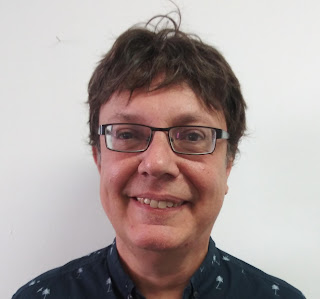
Born 12/6/1948, Stockholm, Sweden (Finnish
Nationality)
Starts:114
Points: 159.5
Wins:5
Poles:5
Fastest Laps:3
Sometimes Formula 1 feels like a soap opera.
Such is the case of Keke Rosberg’s career, so full of anticlimaxes, ups and
downs and sudden changes. One would consider the man finished in 1981, after a
terrible season driving for Fittipaldi, and no one would expect the scoreless
driver to be world champion the next year. Anticlimax or not, Rosberg was very
talented, in fact his statistics don’t show half of it. They don’t show his
acrobatic style and sheer speed as well. Rosberg rose to prominence driving
Super Vees in Europe, eventually reaching Formula 2 in 1976, driving for Jopr
Obermoser’s TOJ. He did the best he could with the novice team, and caught the
attention of American Fred Opert, who ran Chevrons. In these cars, Rosberg won a
few Formula 2 races, although he never challenged for the championship. This was
enough for Teddy Yip to call Rosberg to drive for his budding Formula 1 team.
Yip was a Macao millionaire, who had supported many drivers and teams during the
course of the years, and had made the jump to Formula 1 in 1978. The ugly, Ralt
designed car did not look fast. In fact, Rosberg only qualified it once in five
outings. However, Keke astounded the racing world when he won the International
Trophy under deluge conditions, heading Emerson Fittipaldi in the Copersucar. By
Sweden Rosberg was called to drive the ATS, which was not a good car as well,
but at least it qualified. He was back at Theodore for the German Grand Prix,
driving the year old Wolf. His fortunes improved a bit, but the association was
less than competitive all year. Rosberg was out of Formula 1 in early 1979, but
then got called to replace the retiring James Hunt at Wolf. He only finished a
single race, 9th in France, and did qualify 8th at Zandvoort, but the rest of
the season was quite inconclusive and indifferent. The Fittipaldi team, which
was beaten by Rosberg in the 1978 International trophy, decided to buy Wolf’s
assets, retaining Rosberg as well. He had a superb 3rd place in his debut for
the team in Argentina, after qualifying 13th, but then competitiveness slipped.
There was a definite mid season slump, but in Germany Keke qualified 8th,
finished 5th in Italy and qualified 6th in Canada. More tellingly, Keke proved
faster than twice world champion Emerson Fittipaldi, who retired deciding to
concentrate on team management (Emerson proved no slouch in Formula Indy, a few
year’s later, so you can guess Rosberg’s Herculean efforts in the car). Keke
continued in the Brazilian team, but in spite of a few good qualifying
performances early in the season, after Monaco Fittipaldi proved to be
hopelessly uncompetitive, as well as underfinanced. Having failed to qualify from Germany to
Canada, Keke had a single chance to score a single point in the year, at Las
Vegas and failed, thus going score less. Williams was the top team of the day in
1981, and had two top line drivers, Reutemann and Jones. Jones suddenly decided
to retire after the end of the 1981 (a decision he would regret later), so a
place was open at Williams. Frank decided to give Rosberg a shot, and the Finn
obliged by finishing 5th in his debut, in South Africa. For all intents and
purposes, Reutemann would remain number 1. Then the mercurial Carlos decided to
quit too! So Williams, who had two top drivers the year before, now had a bet on
his hands (Rosberg) and nothing else (eventually he hired Derek Daly). However,
Rosberg performed admirably in the 3 races that ensued Reutemann’s departure,
finishing all three in second place. He was disqualified in Brazil, so his
points were stripped, but it did look as though Ferrari was the best bet to
carry the championship. Then Villeneuve died, and Pironi assumed the role of
number 1 at Ferrari, suddenly accruing a large number of points midseason.
Meanwhile, Rosberg had gone into a little slump, managing a 4th in Detroit and
3rd in Zandvoort during midseason. Then in Germany, disaster struck Ferrari
again: Prioni who was leading the championship with some margin, had a terrible
accident, and was sidelined for the rest of the year. Soon after that Rosberg
had three straight podium positions, culminating with a win in the novel Swiss Grand prix, his maiden Formula 1
victory. He came to Las Vegas as favorite, and John Watson failed to do what he needed to snatch
the title away, which was winning and hoping Keke did not score. From rags to
riches. So for 1983 Keke was finally considered a top F-1 driver, beginning the
year scoring a pole in Rio, but was disqualified again. He then won at Monaco,
and was second at Detroit, but the Cosworth engined Williams was by then a
liability against turbo powered competition. By mid year Rosberg was qualifying
closer to midfield, and it became
obvious that Williams needed the Honda turbo engine as soon as possible. Keke
debuted the engine in South Africa, qualifying 6th and finishing 5th. Keke would
have a turbo engine for a full season for the first time in 1984, and proved
competitive from the word go. He was 2nd again in Brazil, this time getting to
keep the result, and qualified well for most races, but results were poor. He
did give the Honda turbo engine its first victory in the grueling Dallas G.P.,
but after that he retired from all races, proving the Williams Honda combination
was still unreliable. 1985 was a different story. Keke qualified in the top 5
for most of the races (with three exceptions), posted three fastest laps, got a
couple of poles and won two races, at Adelaide and Detroit. He ended up 3rd in
the championship, and was hired by McLaren for 1986. In the new environment
Rosberg underperformed, although he did get another pole and led comfortably in
Germany and also in Australia, but the best he could do was 2nd in Monaco. At
the end of the year he retired, although eventually he did resume his racing
activities, first with the Peugeot prototype team, and then with Mercedes Benz
and Opel in touring cars. He did eventually settle in managerial roles, and is
currently a happy dad overseeing the exploits of son Nico at this old home,
Williams.
Other cars raced:
Formula 2: TOJ, March, Chevron
Formula 5000:
Formula Super-Vee: Lola
Formula-Atlantic: Chevron
Sports-Cars: Porsche (962),
Peugeot
Can-Am: Spyder, Lola
Touring cars: Mercedes-Benz, Opel