Thursday, April 12, 2018

No hard feelings


You don’t have to be a big connoisseur of motorsport to figure out that despite the apparent comradery, sincere hugs in the podium, and hearty laughs at press briefings, there is a lot of competition in the sport. There always was, there always will be. Super inflated egos, good doses of money, media exposure, sponsors, adrenaline, fame, beautiful women, all mixed with nationalism and short careers are explosive elements.

Each teammate is really just another Formula 1 opponent. That's why there is so much antipathy among drivers in the top category of motorsport, specially now that racing is no longer as deadly as in yesteryear - danger actually enabled comradery. However, whether you like it or not, one less colleague means an open opportunity.

Here's the scenario. A driver risks his own life to save the driver who involuntarily ruined his Formula 1 career.

I'm not inventing things, it happened.

In 1973 Ferrari was going through one of its worst seasons. Despite winning two races in the World Championship of Makes, in Formula 1 the team went from bad to worse. Its car, which in 1972 was  competitive, became a disaster in updated guise. In addition, there was the serious political situation. Ah, Ferrari politics!!! Mauro Forghieri, the excellent Scuderia engineer was removed from the team earlier that year. Some say he asked to leave, others say he was kicked out. The fact is that Caliri, and the other engineers did not handle things well in 73, and during the course of the year the Cavallino team collapsed.

Jacky Ickx, the team's top driver for four years, left before the end of the season. And for the first time in many years, Ferrari was absent from several GPs.

Meanwhile, Arturo Merzario persevered, testing the F1 cars and prototypes in Maranello. He had lunch with the Commendatore from time to time, and actualy persuaded him to bring Forghieri back. Arturo also suggested bringing back Clay Regazzoni. Little by little, a good version of the B3 was developed, the version that would be used in 1974.

In the middle of the year, Marlboro was already quite displeased with BRM, and stated that it would not renew the sponsorship, which was eventually invested in McLaren. Also unhappy was Clay Regazzoni, who had pole in the first race of the season at Buenos Aires, leading it for a while, but who had completely lost confidence in the team towards the middle of the season. As Ickx moved away from Ferrari, Clay worked on his return to the team for 1974.

The obvious thing would be to keep Merzario. Among other things, he contributed greatly to the development of the B3, plus the Commendatore actually liked him. Meanwhile, Caliri had been furious with Arturo since the 1000 km of Nurburgring when Arturo failed to comply with team orders and diced with Ickx for the lead, after the Matra-Simcas dropped out. Caliri, who angrily extracted Merzario from the car when Arturo finally heeded to pit orders, was one of those who wanted the Italian out of the team. The Merzario hate-club eventually convinced Lucca di Montezemolo, the new boss, that Arturo should be kicked out.

Many names were considered. Jean-Pierre Jarier, who was the rage in F2 that year, Chris Amon, former team driver, even the names of Brazilians Pace and Emerson were considered. In the end, through Regazzoni’s lobbying, Ferrari ended up opting for his former BRM team mate Niki Lauda, ​​rejecting  Arturo.

The Italian had no choice but to go to the weak Iso-Marlboro team, thus ending any possibility of a top flight F1 career once and for all.

The rest is history. The B3 became an excellent car, and Ferrari narrowly missed the 1974 championship. Lauda was the fastest driver of the year, and in 1975 became the first Ferrari champion since 1964.

1976 - the Nurburgring is the scenario once more. After driving an excellent GP of England with March, at one point reaching fourth position, Arturo Merzario loses the place due to lack of sponsorship. The world of F1 is small. The same Jacky Ickx with whom Merzario had his issues between 1973 and 1975  left the Williams team, dejected, after the British Grand Prix. Frank did not hesitate, and despite financial issues with Merzario in 1975 that led the Italian to leave the team and almost seize Williams property in Monza, Frank rehired Arturo.
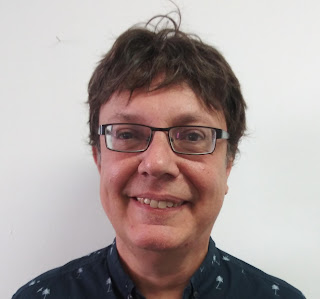
Merzario and Lauda recently

Williams's car, a former Hesketh, was a piece of crap. It was no wonder that Ickx left the team. But Merzario, above all, liked to race and be a part of the scene, so much that he raced through his 60s! And there he was, at the same Nurburgring that caused his Ferrari dismissal.

Trying to save a current teammate, as Arturo did in 1971, when Ignazio Giunti perished in an accident in Buenos Aires, is one thing. Risking life and limb to save the driver who helped sink his F1 career at Ferrari, altogether another. And this is exactly what brave Arturo did. With the help of Brett Lunger, Guy Edwards and Harald Ertl, Merzario plunged into the flames of Lauda's burning No. 1 Ferrari, which could explode at any moment, and helped take the Austrian out of the car in time to save his life. Remember that Lauda was a front runner when he crashed, and many people saw the accident AND DID NOT STOP!

Lauda survived, and that same year, he reached out to Arturo to give him a present, a gold Rolex watch. Arturo refused to accept, only received the gift upon insistence of the engineer Carlo Chiti who was also present.

No hard feelings, Arturo and Niki built a beautiful friendship that persists to this day. Recently, they were together in the Nordschleife, cementing this friendship on the basis of the courage and kindness of a great human being, despite his small frame. Niki would still win many other GPs and two championships, while Merzario's F1 career only went downhill from there. It was also the end of the Nordschleife in F1, much to Denis Jenkinson’s dislike.

IF YOU LIKE RACING STORIES FROM THE 70S, BUY MY BOOK MOTOR RACING IN THE 70s, available in Amazon shops worldwide. amazon.com/dp/1732674426


Monday, April 9, 2018

The wealthiest Formula 1 driver on Earth


There was a great deal of controversy surrounding Canadian driver Lance Stroll past year. In the opinion of many, his billionaire father would be the only leverage to the young driver's career. This opinion seems to prevail in many countries, except Canada, I suppose. Time - that is, the 2018 season - will tell whether or not Lance has any talent, for he will need it to get this latest Williams far up the grid.

However, this post is not about Lance. After all, Lance’s father is very  much alive, so Lance himself is not an extremely wealthy individual just yet. As the post is entitled "The wealthiest Formula 1 driver in the world", do the math.

Yes, I know a certain Bernard Ecclestone tried to qualify for the 1958 Monaco and British Grand Prix with an old Connaught-Alta. At the time a mere car dealer, Bernie was very optimistic to think that had any chance to start the race, for, among other things, there was a huge entry list that year. Bernie's competitive career is somewhat obscure. Ecclestone was not the only top Formula 1 team owner to have tried a career as a driver. Ken Tyrrell, Max Mosley, Frank Williams, Eddie Jordan, among others, also drove competitively without much success. Colin Chapman, in my opinion, could have been a good driver, and Enzo Ferrari was not a bad driver in the 20’s. On the other hand, multi-champion Alain Prost tried to own a F1 team and was a failure. Le Professeur was completely out of his element as team chief. To each his own.

TO BUY MY BOOK Click here https://www.amazon.com/Motor-Racing-70s-Pivoting-Organized/dp/1732674426 

The world's richest former Formula One driver is neither Michael Schumacher nor Ayrton Senna's estate.  Not Jackie Stewart, either. Do not even think about Eddie Irvine, although he has been exemplary in terms of investing his money.

He is an Italian driver who did not do very well, at least in F1. He tried to qualify 15 times between 1989 and 1990, and actually ran 9 GPs with Minardi. At the time, F1 had an immense number of Italian pilots, among them Alboreto, Patrese, Nannini, so he did not stand out even among its countrymen. His best finish was a timid 11th. place. He won races in Italian F3, but when he tried his luck on the F-2 and F3000, he did not do well. However, in sports cars he had a reasonable resume. In fact, he won the Le Mans 24 Hours of 1985 with Klaus Ludwig and John Winter, other less expressive races, and also drove for the Lancia and Toyota teams.

His name, Paolo Barilla, who according to Forbes magazine, has a fortune of $ 1.3 billion. He and his brothers inherited the largest pasta maker in Italy, the homonymous Barilla.


You might be a tad disappointed that the guy's net worth was basically the result of inheritance. Be that as it may, he is by far the richest Formula 1 driver ever.

2020 UPDATE

Some people have taken exception to this post, stating that Bernie Ecclestone and Roger Penske were probably wealthier than Barilla.  As for the first, his fortune can be at best estimated. Penske's fortune has allegedly taken a hit as of late, and probably more so during the 2020 pandemic. As for pasta, people are still eating tons of it, all over the world. I also believe that Barilla at least tried to have a career as a race driver, which cannot be said of either Bernie and Roger, who were business people doing some driving on the side.

Some people have mentioned Revson(!), Pedro Diniz (!!!), and even Johnny Dumfries. I have no idea how much Prince Bira was worth, he might have been a more likely candidate.

Since the subject of money in racing apparently arises your interest, you should know that I have written an entire chapter on money in racing in my book Motor Racing in the 70s - Pivoting from Romantic to Organized. The issue is not discussed only in terms of Formula 1: Sports Car, Le Mans, USAC, NASCAR, Lower Formulae, Can AM, Interserie, Formula 5000, IROC Formula Super Vee, Touring Cars and other categories are also discussed, providing some rare facts and figures in regards to this issue. Hundreds of sources were researched for the book.

TO BUY MY BOOK Click here https://www.amazon.com/Motor-Racing-70s-Pivoting-Organized/dp/1732674426 You may also buy it from amazon stores i UK, Italy, France, Germany, Holland, Mexico, India, Australia, Spain, Japan, providing the ISBN number 9781732674424.

The book is not only about money, of course. It has 472 pages, 242 photos, and provides highlights of global racing in the decade, with long lists of venues and drivers from 85 countries, hundreds of unknown manufacturers, short bios of main personalities from the period, essays on the main racing categories of the world, with applicable rare statistics. Some of the information will blow your mind away. 

Carlos de Paula is one of the top Brazilian Portuguese translators in the USA since 1982. And now a top Portuguese AI Translation editor as well. 


Some considerations concerning the Bahrain Grand Prix

This is not a news report. There are tons of other more qualified sites where you can read reports on the race. These are just some observations I had about the race.

Ferrari is doing mostly well, however, my feeling is that Mercedes still has the upper hand, and it has lost two easy races. However, the gap has shortened between the top 2 teams in F-1.

In fact, it seems obvious that having a Mercedes engine is no longer guarantee for good performance. Both Force India and Williams have dropped further down the field, while Renault, Toro Rosso, McLaren and Haas have leaped ahead.

For Robert Kubica, strangely, good news. Had he been hired as the Williams race driver, certainly tons of people would blame him for the poor Williams performance. It would be a nasty comeback for the talented Pole. Better dreaming about what could have been, rather than being disappointed with poor results.

Mclaren dropped Honda, and now, two races into the season, has to witness a Honda equipped Toro Rosso, driven by a rookie, no less, qualify and finish better than a Mclaren Honda did the last three seasons. Worse yet, Pierre Gasly was a front runner during the entire race, mostly running 4th or 5th.

Another surprise was Marcus Ericsson in the Sauber. I, for one, believed Alfa Romeo would be better served with a link up to Haas (both technically and in marketing terms), and when the Sauber-marriage was confirmed I was disappointed. I confess I am an Alfista at heart and seeing Alfa eternally at the back of the grid did not make me happy. Yet, Ericsson did race well yesterday, and yes, part of the result was due to a one pit stop strategy. But Ericsson, never highly touted during his F1 career, actually showed a lot of grint and skill keeping the car ahead of faster machinery.

Kimi Raikkonen again suffered the ills of frantic Ferrari pitstops that remind me of 50s, 60s and 70s entertaining Ferrari pit work. Kimi is so far doing all the team requires of him, but honestly, I do not think the team is serving him well.

I do not remember a top line team doing as bad as Red Bull did on a first lap of a race as yesterday. Both cars out in unrelated incidents. It can only get better.

A funny thing I noticed. Bahrain, being Bahrain, a devout Muslim country, Martini sponsorship on the Williams, and Chandon on Mclaren were nowhere to be found. Strangely, the logos for Estrella Galicia appeared on Renault, and Singha on Ferrari. Isn't beer considered an alcoholic beverage in Bahrain?


I guess beer is not an alcoholic beverage in Bahrain. Beer logos were prominently found, not so Chandon and Martini Rossi.

Friday, March 30, 2018

The Brazilian Mclaren M23

I was reading an excellent blog posting on the supposed McLaren M23 owned by Antonio Carlos Avallone.

In fact, the M23 was not an M23, but rather the only McLaren M25 ever built, designed by McLaren in 1973 specifically to house a Chevrolet engine, to be used in Formula 5000. It was tested by Howden Ganley, and purchased by Avallone at the beginning of 1974. The M25 was based and very similar to the M23, and it was also similar to the wedge shaped McLaren Formula Indy of the day.

The story is real, and there is a twist. There were legal proceedings in England against Avallone, filed by David Hepworth, not by BRM or Louis Stanley as reported elsewhere, concerning a BRM P154 that had burned in a fire in a ship on the way to the Avallone promoted Copa Brasil series 1972. For a long time a fancy story circulated, saying the ship was full of European cars that were going to take part in the Copa Brasil, seemingly an excuse for a weak grid that was fielded at the end of the day.

As far as can be told, the only race car that was lost in this unnamed ship was the BRM P154 of Hepworth, the Englishman who had purchased the BRM P154 program from the works (two cars, parts, etc.) because the factory had built a new Can-Am-Interseries car for 1972, the P167. In fact Hepworth raced this car in the 1972 Interseries (named BRM P154/167 in some places, for it had some updated components from P167) earning a fifth place at Silverstone. 

Due to insurance issues, Hepworth had filed the lawsuit to recover his loss, for the cars had been improperly insured. Hepworth won in the courts, and the M25 ended in his hands. One of the chassis of the P154 exists to this today, in fact, is on sale. Two BRM P154s were produced.

The M25 was to be used very briefly in Formula 5000. The mysterious car was entered in a single 1975 race, under Rikki Pierce's name, by a team called Renoir that included the future world champion Keke Rosberg. The car did not show in Brands Hatch, with the official explanation that "the team had not been formed. " Such ghost entries were common in F5000 races, in fact, often more cars were entered than raced.


In 1976 the car was entered by David Hepworth, who won the car in his lawsuit against Avallone, and it was driven by 1974 F5000 champion Bob Evans in the Shellsport championship, earning a second place and running in only two races in F5000. The car was equipped with a 5 liter Chevrolet engine in those two occasions.

The M25 was eventually bought by Spaniard Emilio de Villota, who put the car in M23 specifications, equipping it with Cosworth engine and racing it in the Aurora Championship in 1977 and 1978 on several occasions. The M25 was not the car used by Villota in the World F1 Championship in 1977 and 1978. Please note that Emilio had a true M23 which he used to run in the World Championship, and which won some races in British Group 8.

The M25-1 survives today and races in classic car races.

Names in F-1

Lately there have been many Sebs in F1, Buemi, Bourdais and Vettel (and also in WRC, Loeb and Ogier) The unusual thing in this is that the name Sebastian has been rather rare in F1 and racing in general until recently. In fact, there is a cyclical nature in surnames in F-1, just like in society in general. There was a time it seemed that every French driver was Jean-Pierre, then Erics and Philippes sprung about all over the place.

John, in all its linguistic varieties has been by far the most prevalent name in F-1. Its popularity is decreasing, and the last representative of johnhood is Giancarlo Fisichella.

However, for a time it seemed you needed to be a John to win an F-1 title. No less than 3 of the 50's champions were named John. In fact, Johns ruled F-1 from 1954 to 1960 ! (Juan Fangio from 54 to 57, John Michael Hawthorn 1958, and John (Jack) Brabham, 1959 to 1960). Lately, Johns have disappeared from F-1.

Here is a list of surnames of drivers that have won at least one F-1 race. the Indy 500 has been omitted from this list.

JOHN - (Jackie) Stewart, Surtees, Watson, (Michael) Hawthorn, (Jack) Brabham, Herbert
JEAN - Alesi
JEAN-PIERRE - Beltoise, Jabouille
GIANCARLO - Baghetti, Fisichella
GIANCLAUDIO - Reggazoni
JUAN-MANUEL - Fangio
JUAN-PABLO - Montoya

One of many winning "Johns"

PETER - Gethin, Collins, Revson
PEDRO - Rodriguez
PIERO - Taruffi
JOSEPH - Siffert
JOSÉ - (Carlos) Pace, Froilan Gonzalez
GIUSEPPE - Farina


MICHAEL - Schumacher
MIKA - Hakkinen
MICHELE - Alboreto

JACQUES - Laffite, Ickx, Villeneuve

RICCARDO - Patrese
RICHARD - Ginther

ALAIN - Prost
ALAN - Jones

LUIGI - Fagioli, Musso

CARLOS - Reutemann
CHARLES - (A.S.) Brooks
KARL - (Jochen) Rindt

JAMES - Clark, Hunt

PATRICK - Depailler, Tambay

FELIPE - Massa
PHILIP - Hill

ALBERTO - Ascari
ALBERT - (Francois) Cevert

STIRLING - Moss

JOAKIN - Bonnier
JOCHEN - Mass

FERNANDO - Alonso

RUBENS - Barrichelo

AYRTON - Senna

GERHARD - Berger

INNES - Ireland

RALF - Schumacher

EDWARD - Irvine

DANIEL - Gurney, Ricciardo

MARIO - Andretti

DENIS - Hulme

EMERSON - Fittipaldi

ANDREAS - (Niki) Lauda

OLIVIER - Panis

GUNNAR - Nilson

KEIJO - Rosberg

KIMI - Raikkonen

JARNO - Trulli

JENSON - Button

BRUCE - McLaren

THIERRY - Boutsen

ALESSANDRO - Nannini

NELSON - Piquet

GILLES - Villeneuve

JODY - Scheckter

NIGEL - Mansell

LORENZO - Bandini

DAVID - Coulthard

WOLFGANG - Von Trips

DAMON - Hill

NORMAN - (Graham) Hill

LODOVICO - Scarfiotti

VITTORIO - Brambilla

HEINZ - (Harald) Frentzen

MAURICE - Trintignant

RENE - Arnoux

DIDIER - Pironi

ELIO - De Angelis

LEWIS - Hamilton

BENGT - (Ronnie) Peterson

ROBERT- Kubica

HEIKKI - Kovalainen

SEBASTIAN - Vettel

NICO - Rosberg

VALTTERI - Bottas

MAX - Verstappen

Jody Scheckter, a champion full of surprises

Jody Scheckter had a very unusual Formula 1 career, full of surprises. He literally burst into the scene, a very fast, unruly driver in his first outings with McLaren in 1972 and 1973, proving extremely crash prone. He had a famous come together with Emerson Fittipaldi in France, while leading, caused a pile up in the first stages of the race at Silverstone, plus crashed in Canada. His mount was great, a first year McLaren M23, and he could have scored quite a few points. After all, smooth driver Jacky Ickx in fact scored a podium at the Nurburgring in his first try.

Then Jody was hired by Tyrrell for 1974. He was obviously not a first pick. Tyrrell was indeed a very conservative type of guy, at the time very much used to constant success. Unfortunately, things went from excellent to bad at the end of 1973. Tyrrell won the driver's title at Monza, then lost both Francois Cevert and Jackie Stewart at Watkins Glen, one dead, the other retired. I find it unusual that Tyrrell would hire two relatively inexperienced drivers for 1974, but that is what he did, after Chris Amon failed to strike Ken's fancy.

Surprisingly, the explosive Jody became a very sedate driver, in fact, he was not that fast in the early 1974 races, the 006 model known as a difficult to drive car. Only after the new 007 came onboard the results appeared, and by the end of the year he became quite the opposite of the 1973 Jody, a reliable driver who was expected to score points. The transformation was amazing, but quite a lot of the speed was gone - forever.

A couple of years more with Tyrrell proved inconclusive, then he was surprisingly hired by Wolf, for 1977, and more surprisingly still, won the first time out. A third surprise, he continued on the pace for the rest of the year, becoming runner up to Niki Lauda.

Then another surprise in 1978. He continued at Wolf, and all that pace and reliability disappeared. At the end of the year he was hired by Ferrari.


At Ferrari, he picked up the pace again, although he had a very tough internal battle, as his teammate was the extremely talented and fast Gilles Villeneuve. On the strength of reliability, a favorable scoring system and some luck (Williams did not debut its new challenger FW07 before), Jody finally became world champion, although not a dominating one.

Then good ole Jody sprung yet another surprise in 1980. All the fire was gone, his performance was pathetic, although, admittedly, that year's Ferrari was no piece of cake. By the end of the season he failed to qualify for a race, ending up with the worst year-after performance by a current world champion. Not surprisingly, Jody retired, although he claimed he still had plenty of offers.

He retired before reaching 30 years of age, never racing again.

Thursday, March 29, 2018

Espionnage is bad - how about downright theft???

I am always amused when people say "what is this world coming to", whenever they hear reports of crimes, accidents, basic societal decay, as if to say the world was that much better say, 50 or 100 years ago, than today. Most cities had a terrible feces smell just a relative short while back, most of the world had no running water, much less sewage lines, politicians used to put contracts on their nemesis in many parts of the world instead of bad mouthing them, and sexual crime has always been bad. Just to a name a few things.

Many people had a very unusual response to the recent Stepney-gate, the spy saga that rocked the F-1 world. As if all types of such improprieties never took place, and decay had finally arrived in the hitherto pristine waters of Formulaonedom, fifty seven years down the line!!!

The following borders on the comical, and it just goes to show that bad things happened in F1 in the past too, although this was not an "inside job".

Jean Pierre Jarier had a nasty accident in the first lap of the Argentine GP of 1974, denting the tub of his Shadow DN1 quite badly, to the point that chassis 8A would be useless for the next race in Brazil. The chassis was taken to the next stop in the calendar anyway, although Shadow had to hurriedly ship another tub from England, much to the annoyance of the Brazilian customs authorities, who could not understand the need and did their utmost to bar entry of the chassis in the country. Eventually, the replacement tub came into Brazil legally, and Jarier was ensured a place in the race.

A picture in an Autosprint magazine of the time shows the bent chassis lazying about under the scorching January sun, against the pit garage wall in Interlagos. Apparently nobody was caring much for the tub ended up being stolen. Yes, you read right, stolen.

As late as 1994, Shadow owner Don Nichols still seemed very upset with the tub's disappearance, although DN1's were not that rare, eight examples were built. But it was his property, after all.

There is no official word on the whereabouts of the missing Shadow DN1, although wild stories circulate in Brazilian racing circles to this day. Lest anyone jump to conclusions, this had nothing to do with the Brazilian formula 1 project.

So, you see, Formula 1 is not this cocoon, where every one respects each other, that some people purport to be. The theft of the DN1, as I said, was likely not an inside job at all, as Shadow was a second-year builder, the DN1 was anything but revolutionary, and people had bigger fish to fry than study the last year Shadow tub. Exchanges of drawings by disgruntled employees, illicit photographs and hiring of competitor's staff with the sole intention of finding secrets have all been reported by F1 insiders.

I will say, it is harder to hide dirty work these days, for any length of time.

CARLOS DE PAULA LAUNCHES NEW BOOK CELEBRATING THE 100 YEARS OF 24 HOURS OF LE MANS

 Author Carlos de Paula, known for his historical auto racing books, has launched a new book, the "24 Hours of Le Mans Curiosities...