Friday, March 30, 2018

The Brazilian Mclaren M23

I was reading an excellent blog posting on the supposed McLaren M23 owned by Antonio Carlos Avallone.

In fact, the M23 was not an M23, but rather the only McLaren M25 ever built, designed by McLaren in 1973 specifically to house a Chevrolet engine, to be used in Formula 5000. It was tested by Howden Ganley, and purchased by Avallone at the beginning of 1974. The M25 was based and very similar to the M23, and it was also similar to the wedge shaped McLaren Formula Indy of the day.

The story is real, and there is a twist. There were legal proceedings in England against Avallone, filed by David Hepworth, not by BRM or Louis Stanley as reported elsewhere, concerning a BRM P154 that had burned in a fire in a ship on the way to the Avallone promoted Copa Brasil series 1972. For a long time a fancy story circulated, saying the ship was full of European cars that were going to take part in the Copa Brasil, seemingly an excuse for a weak grid that was fielded at the end of the day.

As far as can be told, the only race car that was lost in this unnamed ship was the BRM P154 of Hepworth, the Englishman who had purchased the BRM P154 program from the works (two cars, parts, etc.) because the factory had built a new Can-Am-Interseries car for 1972, the P167. In fact Hepworth raced this car in the 1972 Interseries (named BRM P154/167 in some places, for it had some updated components from P167) earning a fifth place at Silverstone. 

Due to insurance issues, Hepworth had filed the lawsuit to recover his loss, for the cars had been improperly insured. Hepworth won in the courts, and the M25 ended in his hands. One of the chassis of the P154 exists to this today, in fact, is on sale. Two BRM P154s were produced.

The M25 was to be used very briefly in Formula 5000. The mysterious car was entered in a single 1975 race, under Rikki Pierce's name, by a team called Renoir that included the future world champion Keke Rosberg. The car did not show in Brands Hatch, with the official explanation that "the team had not been formed. " Such ghost entries were common in F5000 races, in fact, often more cars were entered than raced.


In 1976 the car was entered by David Hepworth, who won the car in his lawsuit against Avallone, and it was driven by 1974 F5000 champion Bob Evans in the Shellsport championship, earning a second place and running in only two races in F5000. The car was equipped with a 5 liter Chevrolet engine in those two occasions.

The M25 was eventually bought by Spaniard Emilio de Villota, who put the car in M23 specifications, equipping it with Cosworth engine and racing it in the Aurora Championship in 1977 and 1978 on several occasions. The M25 was not the car used by Villota in the World F1 Championship in 1977 and 1978. Please note that Emilio had a true M23 which he used to run in the World Championship, and which won some races in British Group 8.

The M25-1 survives today and races in classic car races.

Names in F-1

Lately there have been many Sebs in F1, Buemi, Bourdais and Vettel (and also in WRC, Loeb and Ogier) The unusual thing in this is that the name Sebastian has been rather rare in F1 and racing in general until recently. In fact, there is a cyclical nature in surnames in F-1, just like in society in general. There was a time it seemed that every French driver was Jean-Pierre, then Erics and Philippes sprung about all over the place.

John, in all its linguistic varieties has been by far the most prevalent name in F-1. Its popularity is decreasing, and the last representative of johnhood is Giancarlo Fisichella.

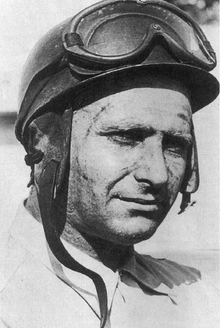
However, for a time it seemed you needed to be a John to win an F-1 title. No less than 3 of the 50's champions were named John. In fact, Johns ruled F-1 from 1954 to 1960 ! (Juan Fangio from 54 to 57, John Michael Hawthorn 1958, and John (Jack) Brabham, 1959 to 1960). Lately, Johns have disappeared from F-1.

Here is a list of surnames of drivers that have won at least one F-1 race. the Indy 500 has been omitted from this list.

JOHN - (Jackie) Stewart, Surtees, Watson, (Michael) Hawthorn, (Jack) Brabham, Herbert
JEAN - Alesi
JEAN-PIERRE - Beltoise, Jabouille
GIANCARLO - Baghetti, Fisichella
GIANCLAUDIO - Reggazoni
JUAN-MANUEL - Fangio
JUAN-PABLO - Montoya

One of many winning "Johns"

PETER - Gethin, Collins, Revson
PEDRO - Rodriguez
PIERO - Taruffi
JOSEPH - Siffert
JOSÉ - (Carlos) Pace, Froilan Gonzalez
GIUSEPPE - Farina


MICHAEL - Schumacher
MIKA - Hakkinen
MICHELE - Alboreto

JACQUES - Laffite, Ickx, Villeneuve

RICCARDO - Patrese
RICHARD - Ginther

ALAIN - Prost
ALAN - Jones

LUIGI - Fagioli, Musso

CARLOS - Reutemann
CHARLES - (A.S.) Brooks
KARL - (Jochen) Rindt

JAMES - Clark, Hunt

PATRICK - Depailler, Tambay

FELIPE - Massa
PHILIP - Hill

ALBERTO - Ascari
ALBERT - (Francois) Cevert

STIRLING - Moss

JOAKIN - Bonnier
JOCHEN - Mass

FERNANDO - Alonso

RUBENS - Barrichelo

AYRTON - Senna

GERHARD - Berger

INNES - Ireland

RALF - Schumacher

EDWARD - Irvine

DANIEL - Gurney, Ricciardo

MARIO - Andretti

DENIS - Hulme

EMERSON - Fittipaldi

ANDREAS - (Niki) Lauda

OLIVIER - Panis

GUNNAR - Nilson

KEIJO - Rosberg

KIMI - Raikkonen

JARNO - Trulli

JENSON - Button

BRUCE - McLaren

THIERRY - Boutsen

ALESSANDRO - Nannini

NELSON - Piquet

GILLES - Villeneuve

JODY - Scheckter

NIGEL - Mansell

LORENZO - Bandini

DAVID - Coulthard

WOLFGANG - Von Trips

DAMON - Hill

NORMAN - (Graham) Hill

LODOVICO - Scarfiotti

VITTORIO - Brambilla

HEINZ - (Harald) Frentzen

MAURICE - Trintignant

RENE - Arnoux

DIDIER - Pironi

ELIO - De Angelis

LEWIS - Hamilton

BENGT - (Ronnie) Peterson

ROBERT- Kubica

HEIKKI - Kovalainen

SEBASTIAN - Vettel

NICO - Rosberg

VALTTERI - Bottas

MAX - Verstappen

Jody Scheckter, a champion full of surprises

Jody Scheckter had a very unusual Formula 1 career, full of surprises. He literally burst into the scene, a very fast, unruly driver in his first outings with McLaren in 1972 and 1973, proving extremely crash prone. He had a famous come together with Emerson Fittipaldi in France, while leading, caused a pile up in the first stages of the race at Silverstone, plus crashed in Canada. His mount was great, a first year McLaren M23, and he could have scored quite a few points. After all, smooth driver Jacky Ickx in fact scored a podium at the Nurburgring in his first try.

Then Jody was hired by Tyrrell for 1974. He was obviously not a first pick. Tyrrell was indeed a very conservative type of guy, at the time very much used to constant success. Unfortunately, things went from excellent to bad at the end of 1973. Tyrrell won the driver's title at Monza, then lost both Francois Cevert and Jackie Stewart at Watkins Glen, one dead, the other retired. I find it unusual that Tyrrell would hire two relatively inexperienced drivers for 1974, but that is what he did, after Chris Amon failed to strike Ken's fancy.

Surprisingly, the explosive Jody became a very sedate driver, in fact, he was not that fast in the early 1974 races, the 006 model known as a difficult to drive car. Only after the new 007 came onboard the results appeared, and by the end of the year he became quite the opposite of the 1973 Jody, a reliable driver who was expected to score points. The transformation was amazing, but quite a lot of the speed was gone - forever.

A couple of years more with Tyrrell proved inconclusive, then he was surprisingly hired by Wolf, for 1977, and more surprisingly still, won the first time out. A third surprise, he continued on the pace for the rest of the year, becoming runner up to Niki Lauda.

Then another surprise in 1978. He continued at Wolf, and all that pace and reliability disappeared. At the end of the year he was hired by Ferrari.


At Ferrari, he picked up the pace again, although he had a very tough internal battle, as his teammate was the extremely talented and fast Gilles Villeneuve. On the strength of reliability, a favorable scoring system and some luck (Williams did not debut its new challenger FW07 before), Jody finally became world champion, although not a dominating one.

Then good ole Jody sprung yet another surprise in 1980. All the fire was gone, his performance was pathetic, although, admittedly, that year's Ferrari was no piece of cake. By the end of the season he failed to qualify for a race, ending up with the worst year-after performance by a current world champion. Not surprisingly, Jody retired, although he claimed he still had plenty of offers.

He retired before reaching 30 years of age, never racing again.

Thursday, March 29, 2018

Espionnage is bad - how about downright theft???

I am always amused when people say "what is this world coming to", whenever they hear reports of crimes, accidents, basic societal decay, as if to say the world was that much better say, 50 or 100 years ago, than today. Most cities had a terrible feces smell just a relative short while back, most of the world had no running water, much less sewage lines, politicians used to put contracts on their nemesis in many parts of the world instead of bad mouthing them, and sexual crime has always been bad. Just to a name a few things.

Many people had a very unusual response to the recent Stepney-gate, the spy saga that rocked the F-1 world. As if all types of such improprieties never took place, and decay had finally arrived in the hitherto pristine waters of Formulaonedom, fifty seven years down the line!!!

The following borders on the comical, and it just goes to show that bad things happened in F1 in the past too, although this was not an "inside job".

Jean Pierre Jarier had a nasty accident in the first lap of the Argentine GP of 1974, denting the tub of his Shadow DN1 quite badly, to the point that chassis 8A would be useless for the next race in Brazil. The chassis was taken to the next stop in the calendar anyway, although Shadow had to hurriedly ship another tub from England, much to the annoyance of the Brazilian customs authorities, who could not understand the need and did their utmost to bar entry of the chassis in the country. Eventually, the replacement tub came into Brazil legally, and Jarier was ensured a place in the race.

A picture in an Autosprint magazine of the time shows the bent chassis lazying about under the scorching January sun, against the pit garage wall in Interlagos. Apparently nobody was caring much for the tub ended up being stolen. Yes, you read right, stolen.

As late as 1994, Shadow owner Don Nichols still seemed very upset with the tub's disappearance, although DN1's were not that rare, eight examples were built. But it was his property, after all.

There is no official word on the whereabouts of the missing Shadow DN1, although wild stories circulate in Brazilian racing circles to this day. Lest anyone jump to conclusions, this had nothing to do with the Brazilian formula 1 project.

So, you see, Formula 1 is not this cocoon, where every one respects each other, that some people purport to be. The theft of the DN1, as I said, was likely not an inside job at all, as Shadow was a second-year builder, the DN1 was anything but revolutionary, and people had bigger fish to fry than study the last year Shadow tub. Exchanges of drawings by disgruntled employees, illicit photographs and hiring of competitor's staff with the sole intention of finding secrets have all been reported by F1 insiders.

I will say, it is harder to hide dirty work these days, for any length of time.

Brazilian Racing in the 70's

By Carlos de Paula

By far, the most important development in Brazilian racing in the 70’s took place out of Brazil: namely, Emerson Fittipaldi’s achievements in Formula 1. Due to this very fact, the face of Brazilian racing changed fast, and racing was transformed from a niche sport, to a mass sport. All of sudden, great media attention was devoted to racing, not only international racing, but local racing as well. Such attention translated into commercial sponsorship, factory involvement, more organized championships, completion/construction of new race tracks, which basically set the scenario for racing in years to come.

The opening of new permanent tracks was a major feature of the new decade. Not only was Interlagos reopened in early 1970, with the finale for the International Formula Ford tournament, another important race tracks was inaugurated that year Tarumã, in the State of Rio Grande do Sul. Cascavel’s paved track was open for business in 1973, Brasilia and Goiania were inaugurated in 1974, Guaporé’s paved track opened in 1976, and the new, international level Rio de Janeiro track began operations in 1978. As a result, the last of Brazil’s “street” races, took place around the Mineirão stadium in Belo Horizonte (where Brazil eventually lost to Germany, 7 x 1, in the 2014 World Cup), and Salvador’s streets, in 1972. After that, the only racing events on open roads were rallies, until safer, modern street racing resurfaced in the 90’s, in the streets of Florianopolis and Vitoria.

Commercial sponsorship had been present in Brazilian racing since the 30’s, but given the niche status of the sport, it was never taken seriously by sponsors. It was more a case of driver friends who happened to be business owners giving a few bucks to race drivers, who in exchange painted a company’s name on a car. In some cases, the driver owned a business, and used the race cars as a moving billboard for the few people around the race track to see (sometimes quite a few thousand). In other words, sponsorship lacked the branding aspect, sports marketing of modern sponsorship, which really began in Formula 1 in 1968. By 1969, some Brazilian race cars featured well painted logos, and by 1971, two major companies, Hollywood cigarettes and Brahma beverages, had initiated a new phase in commercial sponsorship. Hollywood would sponsor a team in local racing until 1976, and it won many championships, in several categories. In spite of the long lasting economic crisis that began in 1974, by the closing of the decade, hundreds of companies, had at one point or another sponsored race teams, at various levels of commitment. More important, companies began investing in the international careers of racing drivers as well.

The decade began with Brazil’s opening up to international racing, for the first time since the 50’s. The driving factor for this was Emerson Fittipaldi’s success in Formula Ford and Formula 3, in 1969, and the resolution of the ACB and CBA dispute. As a result, a number of international tournaments were held, for different categories, with the ultimate goal of achieving a steady Formula 1 Grand Prix date for the country. In 1970, a Formula Ford tournament was held in the early part of the year, a Sports Car tournament called Copa Brasil held in the latter. A couple of Italian teams also took part in the 1000 Mile Race, with current sports cars, an Alfa T33 and a Ferrari 512. In 1971, a Formula 3 tournament was held in the early part of the year, and a Formula 2 series at the end. In 1972, the goal was almost reached: the first Formula 1 Grand Prix proper was held in Brazil, although without championship status. During the rest of the year, another, last F-2 tournament was held, a second Copa Brasil for sports cars, and, for the first time, an international Interlagos 500 KM race was held in September, won by Reinhold Joest. By 1973, Brazil got its first official F-1 GP, which has been on the calendar ever since. The Brasilia race track was inaugurated by a one-off non-championship F-1 event, in 1974, won by Emerson Fittipaldi.

Group 1 racing very successful with drivers and the public...for a while.

As for local racing, 1970 was a buffer year. Long distance races still seemed to prevail in that year, but there was a change of mentality in race promoters. The lesson learned in Europe, mainly England, was that a number of short events for different categories, held in heats, provided more bang for the buck for spectators. A successful experience in Interlagos, in early 1970, paved the way for the future. By 1971, three national championships had been organized: one for Sports Cars, mostly comprising long distance events contested by a number of Porsches (908, 910), Lola T210, Ford GT40, Royales, Alfa GTAs, mixed with locally built prototypes, and assorted Pumas (a Brazilian VW engined GT), touring cars, and an odd 50’s vintage Maserati for good measure, etc; a Touring car championship, which in its first edition also comprised of long distance events, but would shift to a sprint format in coming years, and a Formula Ford championship, with locally built cars, called Bino. These were in fact, a continuation of Willys’ Luis Greco’s idea from the 60’s, and the power plant was the Corcel engine, which began life as a Renault. So this was more of a Formula Renault, then Ford, I suppose. At any rate, Ford decided to invest in the category, something that VW did not do in Formula Vee’s case. The 1971 Touring car championship had many scheduled rounds, in Curitiba, Fortaleza, Salvador and Belo Horizonte, that were cancelled, so it was a troubled first year.

By 1972, another championship was added, for locally built sports cars, called Division 4. These took over sports car racing in 1973, by which time the Sports Car with foreign cars had been canned. In 1973, Division 1 (Group 1) events were run for the first time, in long distance events that caught the fancy of the public, basically due to the fight between Ford x Chevrolet. By 1974, a Group 1 championship was organized, and Formula Super Vee was implemented in Brazil. The local scene seemed healthy enough, until the Government stepped in 1976, initially deciding to prohibit racing as of 1977, and then declaring the prohibition effective immediately . The reason was that racing was supposedly a waste of precious fuel, that cost Brazil so many billions of dollars a year. The racing authorities proved to the dictators, however, that the entire fuel spent in the Brazilian racing calendar corresponded to only 15 minutes of fuel use in the City of São Paulo, hardly putting a dent on the country’s recalcitrant balance of trade! The government reversed its decision, however, long distance races were banned from 1977 on.
In Rio Grande do Sul, with the opening of the Tarumã race track, street/road racing was no more to be. The carreteras were by the beginning of the decade gone, in fact the last driver to race a carretera in Brazil was Camilo Christofaro, with his famous number 18, in 1971. However, regional racing in Rio Grande do Sul remained healthy. Among other things, most of the 25 Bino Formula Fords were bought by gauchos, enough cars to justify holding a regional Formula Ford championship that was run for many years. There was also a healthy regional championship for Touring cars, run during the course of the decade. São Paulo had some regional racing as well, most notably Super Vee and Formula Vee regional championships in 1975, which were contested by dozens of cars. Also noteworthy was the Division 3 championship of 1974, which was won by a retiring Ciro Cayres, one of the mainstays of Brazilian racing since the 50’s. The decade would also witness the retirements of Camilo Christofaro, in 1979, and Chico Landi, in 1973. Division 1 (Group 1) was also hotly contested in São Paulo in the mid 70’s.

As we saw in previous articles, race cars had been built in Brazil since the 30’s, but basically they made use of existing racing/street car chassis/components, and were mainly equipped with American V8s. Chico Landi attempted to launch Formula Junior in the early 60’s, building about 10 purpose made chassis without great effect, and Formula Vee was equally unsuccessful, in spite of several chassis being built by Fitti and Aranae, and other constructors to be announcing programs. Starting around 1967, several one-off prototypes sprung here and there, including the Fitti-Porsche and the Bino, among others, and most were VW powered. Anisio Campos first attempted to actually manufacture race cars a a business with the AC in 1969. By 1970, the fever caught on. First with the Furia, which built only 3 cars, then with Avallone, Heve, Manta, Polar, Kaimann (under license from the Austrian manufacturer) in addition to 25 Bino Formula Fords. Many of these racing car manufacturers built cars for several categories, until about 1975. That was the last year of the prototype series, and race car building in the 70’s simply did not prove to be good business. Chassis would be used for many years, so there was no market for new cars, or money for development of updated models. So most race car building during the 70’s stopped after 1975, and the cars used were simply revamped chassis.

The Super-Vee series was the major series for the rest of the decade, and two of drivers that took part in it actually reached F-1: Ingo Hoffmann and Nelson Piquet. The new Group 1 championship with short sprints began in 1977, by which time Chevrolet’s Opala had surpassed the Ford Mavericks in performance. In that same year, Fiat began its racing activities in Brazil. There was a strong migration towards single make championships, and in fact, Division 3 (highly prepared touring cars) pretty much collapsed before the end of the decade - first the top category, in which Mavericks and Opalas raced, then the up to 2 liters category. By 1979, the top Group 1 class had been transformed into the Brazilian Stock Car championship, which has been well organized from the beginning, and still exists today, in a highly prepared form. Formula Ford and Super Vee still continued, the latter suffering from dwindling grids. There was a series for VW Passat Group 1, and one for Fiat Group 1 cars, in addition to the dying Group 3.
Brazil also joined the exclusive club of Formula 1 manufacturers in 1975, when Wilson Fittipaldi Jr. started the Argentine Grand Prix in his own Fittipaldi FD-01. However ambitious the venture, there was an element of naiveté about it, namely insisting on building the whole car in Brazil in the first years, and using a designer with no top level experience, Brazilian Richard Divila. Such naiveté reached the pinnacle with the signing of brother Emerson as number 1 driver for 1976. In spite of a fair 1978 season, with the Caliri revised Fittipaldi F-5, the Fittipaldi Formula 1 experience was by and large a disappointment, and pretty much ended Emerson Fittipaldi’s F-1 career on a sad note. Starting in 1977, the number of Brazilian drivers trying their luck in Europe grew considerably, starting the trend that continues to this day. By the closing of the decade, Nelson Piquet looked like a future world champion, and so did Chico Serra, to a lesser extent.

A major technological development took place in 1979, when the government again prohibited racing, due to fuel considerations. In little less than 1 month, racing car teams converted their cars to run on alcohol, a fact that was actually quite welcomed by the government, which faced some opposition to its alcohol fuel program.

The 70’s In Names
MAIN DRIVERS
Local Scene – Paulo Gomes, Antonio Castro Prado, Francisco Lameirão, Luiz Pereira Bueno, Lian Duarte, Camilo Christofaro, Ciro Cayres, Abilio Diniz, Alcides Diniz, Mauricio Chulam, Marcos Troncon, Clovis de Moraes, Francisco Feoli, Amedeo Ferri, Pedro Carneiro Pereira, Marivaldo Fernandes, Jan Balder, Antonio Carlos Avallone, Pedro Muffato, Francisco Artigas, Amedeo Campos, Ingo Hoffmann, Alex Ribeiro, Leonel Friedrich, Arthur Bragantini, Milton Amaral, Edson Yoshikuma, Alfredo Guarana Menezes, Luis Moura Brito, Toninho da Matta, Ronaldo Ely, Alencar Junior, Raul Boesel, Affonso Giaffone, Jose Giaffone, Bird Clemente, Nilson Clemente, Celso Frare, Edson Graczyk, Mario Pati Jr., José Pedro Chateaubriand, Pedro Victor de Lamare, Lino Reginatto, Claudio Mueller, Enio Sandler, Fernando Jorge, Eduardo Celidonio, Alfredo Guaraná Menezes, Bob Sharp, Edgard Mello Filho, Reinaldo Campello, Vital Macahdo, Adu Celso, Julio Caio, Clovis Ferreira, Ricardo Oliveira, Julio Tedesco, Jose Carlos Palhares,Atilla Sippos, Jose Travaglini, Antonio Freire, Luis Schaffer, Fernando Dias Ribeiro, Walter Soldan, Luis Paternostro, Alexandre Negrão, Mario Olivetti, Angi Munhoz, Luiggi Giobbi, Emilio Zambello, Piero Gancia, Luis Landi, Roberto Fiuza, Camilo Christofaro Filho, Aloisio Andrade Filho, Jose Rubens Romano, Arialdo Pinho, Jose Moraes

International Scene – Emerson Fittipaldi, José Carlos Pace, Nelson Piquet, Wilson Fittipaldi Jr., Ingo Hoffmann, Alex Ribeiro, José Maria Ferreira, Norman Casari, Francisco Lameirão, Luis Pereira Bueno, Tite Catapani, Ronald Rossi, Fritz Jordan, Leonel Friedrich, Jan Balder, Marivaldo Fernandes, Marcos Moraes, José Pedro Chateaubriand, Pedro Victor de Lamare, Mario Pati Jr., Lian Duarte, Rafaele Rosito, Chico Serra, Mario Ferraris Neto, Aryon Cornelsen, Paulo Gomes, Mario Amaral, Placido Iglesias, Luis Siqueira Veiga, Fernando Jorge, Julio Caio, Luis Carlos Moraes

MAIN CARS
Singleseaters: Bino, Fitti-V, Polar, Avallone, Heve, Kaimann, Mueller, Newcar, Rio-V, BRV, Pati, Govesa, Cianciaruso, Aranae, Pateco, Squalus, Manta, Feca
Touring cars: Chevrolet Opala 2500, 3800 and 4100, Maverick 4 and 8 cylinders, Dodge Charger, Dodge Dart, Chrysler GTX, Alfa Romeo 2300, FNM 2150, Simca V8, Dodge 1800, VW 1300, VW 1600, VW 1600 4 doors, Chevette, Ford Corcel, Fiat 147, VW Passat, Alfa Romeo GTA, Alfa Romeo GTAM, BMW 1600, DKW 1000
Sports/Prototypes/GTs: Porsche 908/2, Porsche 910, Porsche 907, Lola T70, Ford GT 40, Lola T210, Alfa Romeo T33, Avallone (Chrysler, Chevrolet and Ford), Berta-Hollywood Ford, Polar (VW and Ford Turbo), Heve (VW), Manta (VW, FNM, Chrysler and Chervolet), Fúria (FNM, Chevrolet, BMW, Lamborghini, Ferrari, Chrysler), AC-VW, Fitti-VW, Casari-Ford, REPE-Ford, Snob’s Corvair, Prot. Pato Feio, Prot. Camber VW, Prot. Bi-Motor VW/DKW, Newcar-VW, Sabre-VW, Puma-VW, Lorena-VW, Meta-20(Chevrolet Turbo), Royale (Alfa Romeo, Chevrolet, Ford), Carretera Chevrolet, Interlagos

CATEGORIES: Touring Car (Division 3 (highly prepared), HotCars (replaced Division 3) Division 1(basically showroom stock), Stockcar, single make championships for VW Passat, Fiat 147 and Ford Corcel, Formula Super Vee, Formula Vee, Formula Ford, Division 4(Prototypes), Division 6 
(Foreign prototypes)

INTERNATIONAL RACES/TOURNAMENTS: F-1, F-2, F-3, F-Ford, Prototypes/Sports

Brazilian Racing in the 60's

By Carlos de Paula

The 60’s would be a decisive decade in terms of evolution of racing in Brazil. The decade began pretty much as the 50’s ended. Interlagos still ruled supreme as a race track, the gauchos were still on top of their game with their carreteras, and racing specials/pure breed cars would duke it out every once in a while.

The major change was the high volume of participation of Brazilian made cars in racing, which eventually would mean that the public, who was accustomed to watch races featuring large 4.5 liter, 200 HP V8 engined race cars, would have to get used to watching myriad DKWs and Renault Gordini saloons on the race tracks. The historic victory by a Brazilian made FNM JK in the 1000 Mile race of 1960, with Chico Landi and Christian Heins, would show that Brazilian made cars could indeed beat the American horses. The FNM would win many other long distance races in 1960 and 1962, and all of a sudden, long distance races became more common than sprints.

FNM’s success meant further commitment from Vemag, and two other works teams: one from Simca, and the other from Willys. FNM was a government owned factory, always on the urge of bankruptcy, so although it had the most powerful and modern car around, licensed by Alfa Romeo, the “works” team would soon disappear from the tracks (some privateers would continue using the car until 1974). The latecomer Willys team, created under the influence of Bino Heins, would soon bring to the tracks a car called Interlagos, which really, was an Alpine design, built in Brazil. It would soon win everything in sight, until Simca got tired of being beaten, and brought 3 Simca Abarth 2 liters to Brazil. These basically dominated the 1964/1965 seasons, and were returned before the end of the latter season. By then, Vemag had built the Malzoni GT, which although down on power, had the advantage of great torque and front wheel drive, which came in handy in street circuits. However, the days of factory teams were counted, as the three factories that had works teams would be taken over in 1966/1967, and the racing programmes either cut down or downright abolished. Ford took over Willys, which showed some interest in racing, fielding Bino prototypes in the 67 and 68 seasons, while Chrysler took over Simca, and VW, took over Vemag, both teams being closed.
The Interlagos 500 KM continued to feature Mecanica Continental cars in the early part of the decade, some of which dated back to the 30’s. They began to show their age, and by 1965, had been abolished from this race, having been considered unsafe. Racing had changed in Europe as well, and the current breed of racing car in the old continent was not suitable for large American engines, there was no renewal in terms of chassis. It is noteworthy that Formula 1 cars had 1.5 liter capacity in those days. In 1962, there was an attempt by Chico Landi to implement Formula Junior racing in Brazil, and while the ten or so cars were not enough to fill out a grid, eventually the cars were used in Mecanica Continental races. Above all, they were more modern, rear engined designs, and being nimble, even DKW and Gordini engined cars were able to face off Corvette engined dinosaurs. It was in one of Landi’s Juniors, albeit FNM engined, that Celso Lara Barberis died in the early part of the 1963 500 km race. In 64, there were no continentals in the race, only GTs, prototypes and touring cars, so it looked as though the old GP cars would be once and for all retired. The last Mecanica Continental races took place in Interlagos in 1966.

As for the carreteras, they continued to appear in large numbers, especially in the 1000 Mile Race, and in Rio Grande do Sul and Parana. Carreteras would win the 61, 65 and 66 1000 Mile Races, but by 1967, were pretty much outclassed. The only carretera to see off the decade competitively was Camilo Christofaro’s 18 numbered Chevrolet Corvette. Even in Rio Grande do Sul, the carreteras started to give way to Simcas and JKs, and street racing was being considered dangerous and a nuisance, as Brazil’s fleet grew, and road usage became essential.

Rio de Janeiro opened its first proper track in 1966, Curitiba also had its own autodrome, and Brasilia held races around its streets; Guaporé and Cascavel got dirt tracks. Races were held in a number of cities during the decade: Salvador, Recife, Belo Horizonte, Curitiba, Campo Mourão, Lages, Cascavel, Piracicaba, Araraquara, Petropolis, Passo Fundo, Santa Maria, Goiania, Pelotas, Vitoria, Fortaleza, etc. The use of locally built cars popularized auto racing, as never before, although it was still considered a rich man’s game.

There was an attempt to implement Formula Vee racing, in 1966, which basically was unsuccessful. Two championships were run, the first in 1967 won by Emerson Fittipaldi, but VW was not too bullish about supporting the series. In addition to that, Interlagos was closed for major repairs in 1968 and 1969, so, without any racing in Brazil’s major race track, it appeared a little dangerous to race the fragile Vees in street circuits.

A late 60's grid in Brazil - on the front row, an Alfa GTA, the Bino-Ford and Fittipaldi-Porsche protoypes

Street racing would also take a major blow, with the Petropolis debacle in 1968, and it seemed that if racing were to survive in Brazil, race tracks would need to be built – period. Local authorities were becoming ever more reluctant to open their streets to race cars. Another major consideration was that several very powerful race cars were being brought into Brazil, by the late 60’s: an Alfa P33 and a Lola T70 were two major additions in 1969, and more was to come. Gone were the days of humble DKWs and Gordinis.

Starting in 1968, Brazilian race drivers were trying their hand in European racing, and it became clear, with Interlagos closed, that unless other race tracks appeared around Brazil, racing might die. The Brazilian drivers achieved quite a bit of success in those two first years, Ricardo Achcar winning a F-Ford race in 1968, and Emerson Fittipaldi winning several Formula Ford and F-3 races (and a championship) in 1969, and Luis Pereira Bueno winning in F-Ford as well.

During the works cars years, the factories did attempt to go racing internationally. Willys would every once in a while cross the border to Uruguay, and race in Rivera (a stone’s throw from the Brazilian city of Santana do Livramento) and Piriapolis, with a high level of success. Privateer Gaucho drivers would also visit Rivera often. A major undertaking was the building of an Alpine based Willys F-3 car, which was called Gavea. Luis Greco, Willys’s boss, had the vision of creating a Brazilian Formula 3 category, which came to nil. It would actually be a Formula Renault of sorts, which turned out to be Formula Ford in the 70s – that is another story. The Gavea ended up running in the Formula Libre Interlagos 500 of 1965, finishing second to the all conquering Simca Abarth of Jaime Silva, and was fielded in the International F-3 Temporada in Argentina, in 1966. Driven by Wilson Fittipaldi Jr., one could not say the outing was successful, although it was a first time try. This was the last action the car saw. Simca attempted to crack the Grand Prix Standard in Argentina, with EmiSul powered sedans, but all 5 cars broke down.

The 60’s were also the last attempts to hold hill climbs as major events in Brazil, in fact, a Brazilian Hill Climb championship was created in 1967. Not surprisingly, this was the last edition of this championship. Races on roads were also about to fade: the Rodovia do Café race in Parana, in 1968, was basically the last major race on a highway in Brazil, won by Ubaldo Cesar Lolli in an Alfa GTA, a car that won many races in Brazil between 1967 to 1971.
Long distance racing reigned supreme during the 60’s, although São Paulo and Rio de Janeiro championship races were always sprints. The latter carretera and mecanica continental races were all sprints, given the machinery was obviously unable to withstand several hours of racing. 2 hour races, such as the IV Centenario race in Rio de Janeiro, were not uncommon.

This race was won by a Ferrari engined Ferrari!

The Chevrolet Opala, which would be widely used in racing in the 70’s and 80’s, was used for the first time in racing in 1969, winning right from the bat. VW Beetles, which in the early 60’s were very slow and shamefully beaten by cars with smaller engines, had began to feature strongly in results, some of them equipped with 2 liter engines. Another new generation car to be used in racing was the Ford Corcel, which basically was a Renault design left over by Willys. Alfa Romeos features strongly during the 60’s, and BMWs reached the scene in 1968.

Another important fact of racing in those years, which had a negative impact on international racing in Brazil, was the fight between the Brazilian Automobile Club (Automovel Clube do Brasil) and the Brazilian Auto Racing Confederation (CBA). The heart of the question was, who had the authority to sanction races in Brazil. The Brazilian Automobile Club would often threaten drivers of suspension, when they ran in its nemesis-sanctioned races. To make matters more complicated, a number of racing clubs got involved in the mess, which threw Brazil way out of the international racing calendar during the 60s. Apparently, peace had been achieved by 1969, but the whole decade had been lost, as far as international racing was concerned.

THE 60’s in names

DRIVERS
Local Scene
Camilo Christofaro, Ciro Cayres, Jaime Silva, Chico Landi, Christian Heins, Emerson Fittipaldi, Wilson Fittipaldi Jr., Emilio Zambello, Piero Gancia, José Carlos Pace, Luis Pereira Bueno, Bird Clemente, Mario Cesar de Camargo Filho, Marivaldo Fernandes, Anisio Campos, Francisco Lameirão, Rodolfo Olival Costa, Jan Balder, Antonio Carlos Aguiar, Luis Valente, Celso Lara Barberis, Catharino Andreatta, José Asmuz, Vitorio Andreatta, Aldo Costa, Eduardo Celidonio, Jose Fernando Martins, Altair Barranco, Angelo Cunha, Norman Casari, Bob Sharp, Pedro Victor de Lamare, Roberto Galucci, Luiz Greco, Justino de Maio, Eduardo Scurrachio, Ubaldo Cesar Lolli, Anotnio Carlos Porto, Ricardo Achcar, Caetano Damiani, Nelson Marcilio, Jose Ramos, Mario Olivetti, Antonio Mendes de Barros, Ismael Chaves Barcellos, Orlando Menegaz, Ítalo Bertão, Nactivo Camozzato, Ailton Varanda, Alvaro Varanda, Carol Figueiredo, Ludovino Perez, Luis Fernando Terra Smith, Jose Maria Giu Ferreira, Ettore Beppe, Walter Hahn, Nathaniel Townsend, Alex Dias Ribeiro, Marcelo de Paoli, Roberto Dal Pont

International
Emerson Fittipaldi, Wilson Fittipaldi Jr., Christian Heins, Celso Lara Barberis, Fernando Barreto, Antonio Carlos Avallone, Luis Pereira Bueno, Ricardo Achcar, Bird Clemente, Fritz D’Orey

CARS
Touring: FNM JK, Simca, DKW, Gordini/1093, VW Sedan, Opala, Corcel, Alfa Romeo Giulia, Alfa Romeo Giulietta, Alfa Romeo Zagato, Alfa Romeo GTA, Fiat-Abarth, Renault R8, Mini Cooper, Chrysler Regente, Ford Escort, Saab
Singleseaters: Fitti-Ve, Aranae-Ve, BRV, Sprint, Tubolare, AC, Amato, Landi Jr (JK, Simca, DKW and Gordini), Ferrari-Corvette, Alfa-Corvette, Maserati-Corvette, Willys Gavea Formula 3
Prototype/GT/Sports: Willys Interlagos, Simca Abarth, Simca Tempestade, DKW Malzoni, Brasinca Chevrolet 4200, Carretera Chevrolet, Carretera Ford, Alpine, Prot. Bino, Fitti-Porsche, AC-VW, Alfa Romeo P33, Lola T70, Prot.Elgar VW, Lorena Porsche, Puma-VW, VW Bi Motor, Porsche 356, Karmann Ghia Porsche, Ferrari GTO, Maserati 3000, Maserati 4500, VW-Porsche, Porsche 911, Lotus Europa, Karmann Ghia Corvair
CATEGORIES: Touring Cars, GT, Protoypes, Mecanica Continental, Carreteras, Formula Junior, Formula Vee

Tuesday, December 10, 2013

My recommendations to the FIA

I was so excited with the FIA's decision to assign double points to the F1 championship finale, especially given the traditional venue, Abu Dhabi. After all, this is where fine folks like Nuvolari, Fangio, Clark, Stewart and Senna honed their skills and set the parameters for the history of motor racing. Thus I decided to give some suggestions of my own, to enhance our cherished championship. No need to pay, Mr, Todt. I am giving this free of charge. All I want is genuine emotion.

First of all I think F1 should adopt NASCAR style score. I reckon things would be narrow. This might also be the only chance Marussia amd Caterham get of scoring points before their ultimate demise.

As for the grid, I believe the grid for the entire year should be reverse of the championship order, by that meaning Vettel would always start last, and Marussia and Caterham up front. It will be fun seeing these  two teams leading the first seconds of every race before being wrecked out by a lightning faster midfielder Perhaps Alonso will win a championship for Ferrari that way.

Another reasonable option would be having Vettel always starting last. Perhaps one lap late! He should be punished for being so good! Anti-meritocracy for all. A cool 50 kg of ballast would do him good, the kid is too thin.

We could also do like the 30s, when grid positions were decided by chance. No more qualifying deciding starts, that is so passé. The qualifying thing could remain, for the heck of it, after all, it is an additional TV program and a chance to rake in a few more bucks.

Furthermore, to increase the game aspect of the category, a driver would be picked by race, to lose the scored points (remember everybody would score with NASCAR scoring). I can't wait to see the loser's face, specially if it is Maldonado. A good thing Chris Amon retired along time ago, otherwise he would be picked every race.

Fun, fun, fun. All cars would be fueled by the FIA. A couple per race would have a tad short on fuel. This would make things very exciting.

If NASCAR scoring is adopted, I also suggest awarding one point per lap a driver is last. That way, the Caterham and Marussia guys stand a chance of winning the championship. To ensure lots of passing up front, I believe a driver should lose a point for every lap led. This would level things out and change strategies.

As for tire changing, I am all for it. The only thing is, the drivers themselves would change them. The only help they would get from the pits is having the car jacked up. The driver would then remove and install the tires. No more 1.9 sec pit stops. After all, the drivers make a bundle, they should work a little more for their money. The teams would also be happy, saving on salaries and uniforms, for they would no longer require 35 guys to service a car.

Drivers who score fastest lap should also dock a few points for all that haste. They would lose 5 points on the next race, no appeal. And the FIA could also assess a speed fine, after all, the rent at Place de La Concorde must be hefty.

These are my humble suggestions. I quite positive we will have a swell championship if they are adopted.


CARLOS DE PAULA LAUNCHES NEW BOOK CELEBRATING THE 100 YEARS OF 24 HOURS OF LE MANS

 Author Carlos de Paula, known for his historical auto racing books, has launched a new book, the "24 Hours of Le Mans Curiosities...